
🔢 Disc Golf Scoring
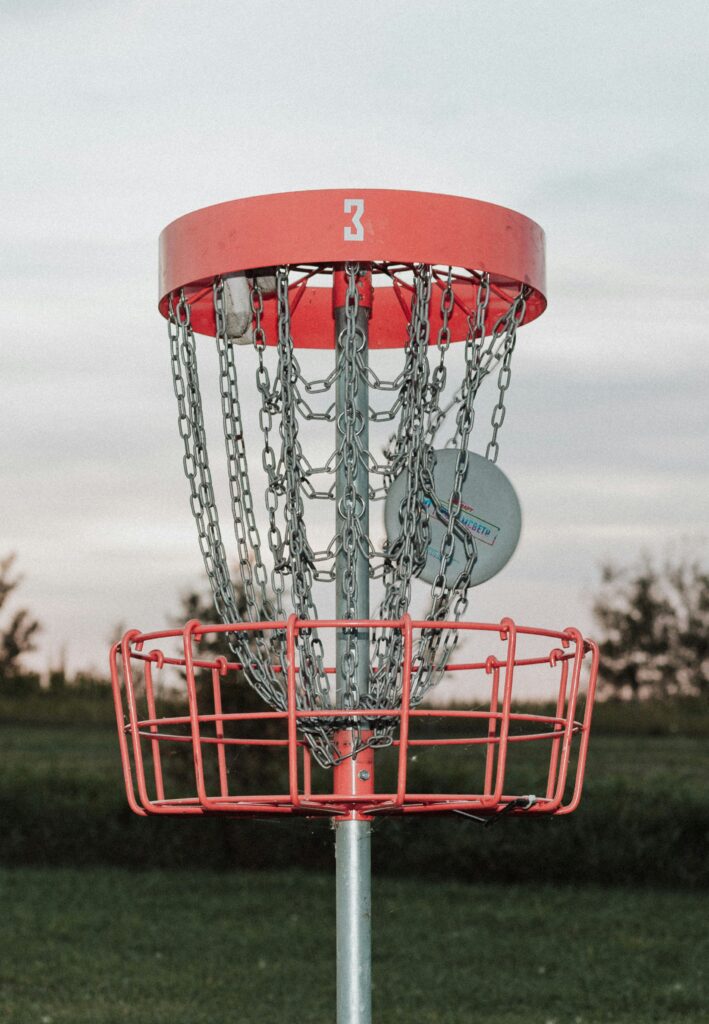
Disc golf scoring is simple and similar to traditional golf. Players count how many throws (also called strokes) it takes to complete each hole. The goal is to finish the course with the lowest total number of throws.
🧮 How Scoring Works
Each throw counts as one stroke.
• Every time a player throws the disc = 1 stroke
• The final throw into the basket also counts
• The total strokes for each hole are added together
• The player with the lowest score at the end of the round wins.
What Is Par?
Each hole has a par, which is the expected number of throws to complete the hole.
Common pars include:
• par 3
• par 4
• par 5
Players aim to complete each hole in fewer throws than par.
🏆 Scoring Terms
Disc golf uses simple scoring terms:
• Birdie – 1 throw under par
• Par – equal to par
• Bogey – 1 throw over par
• Double bogey – 2 throws over par
Example:
If a hole is par 3:
- 2 throws = birdie
- 3 throws = par
- 4 throws = bogey
📊 Score Example
| Hole | Par | Throws | Score |
|---|---|---|---|
| 1 | 3 | 2 | -1 (Birdie) |
| 2 | 3 | 3 | 0 (Par) |
| 3 | 4 | 5 | +1 (Bogey) |
Scores are added across all holes to get a total score.
⚠️ Penalties
Penalty strokes may be added in certain situations.
Common penalties include:
• disc goes out of bounds
• missed mandatory route (if used on course)
• rule violations
Each penalty usually adds one extra stroke to the player’s score.
⏱️ Round Scoring
A full round usually includes:
• 9 holes or
• 18 holes
Players keep track of their total score across all holes. The player with the lowest total score wins the round.
⚡ Why Scoring Matters
Disc golf scoring rewards:
• accuracy
• consistency
• smart shot selection
Players who can complete holes with fewer throws gain an advantage.
🔗 Related Guides
- Learn Disc Golf
- Disc Golf Course Layout
- Disc Golf Rules
- Disc Golf Discs